



Trace Amine-associated Receptor (TAAR)
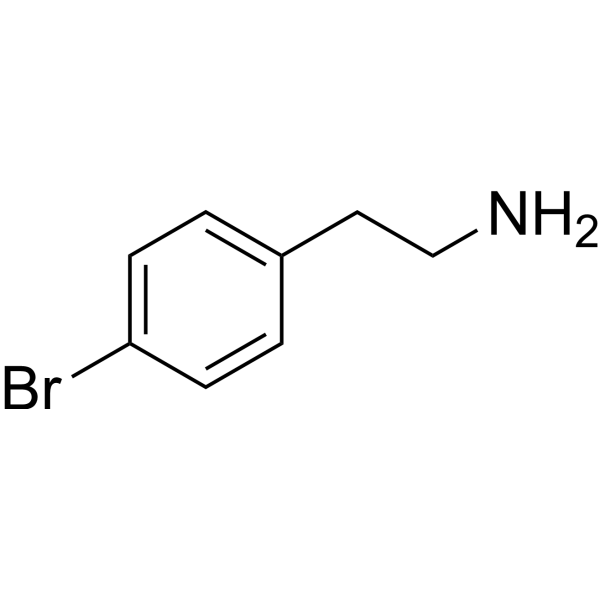
Trace amine associated-receptors (TAARs) are a class of G protein-coupled receptors that were discovered in 2001. Humans possess six functional isoforms (TAAR1, TAAR2, TAAR5, TAAR6, TAAR8, and TAAR9), whereas some fish species express over 100. It acts as an endogenous receptor for the trace amines. Trace amines are endogenous compounds classically regarded as comprising β-phenylethyalmine, p-tyramine, tryptamine, p-octopamine, and some of their metabolites.
Although all other TAARs serve predominantly or exclusively as chemosensory receptors in the main olfactory system, TAAR 1 has been demonstrated to be a novel modulator of dopaminergic, serotonergic and glutamatergic activity in the brain. And TAAR 1 has been identified as a novel therapeutic target for schizophrenia, depression, and addiction. In the periphery, TAAR1 regulates nutrient-induced hormone secretion, suggesting its potential as a novel therapeutic target for diabetes and obesity. TAAR1 may also regulate immune responses by regulating leukocyte differentiation and activation.
All Product Categories
-
Trace Amine-associated Receptor (TAAR) Related Products (37)
Related Products (37)

- 1
- 2
-
Ro 5212773
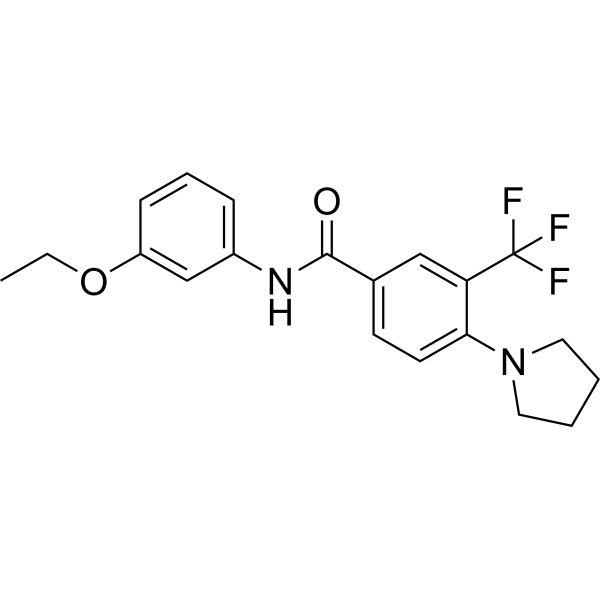 0 ImagesSynonyms: EPPTBRo 5212773 (EPPTB) is a potent and selective trace amine-associated receptor 1 (TAAR1) antagonist (Ki=0.9 nM for mouse TAAR1), with no significant effects on other TAARs. TAAR1 is a G protein-coupled receptor (GPCR) that is nonselectively activated by endogenous metabolites of amino acids.
-
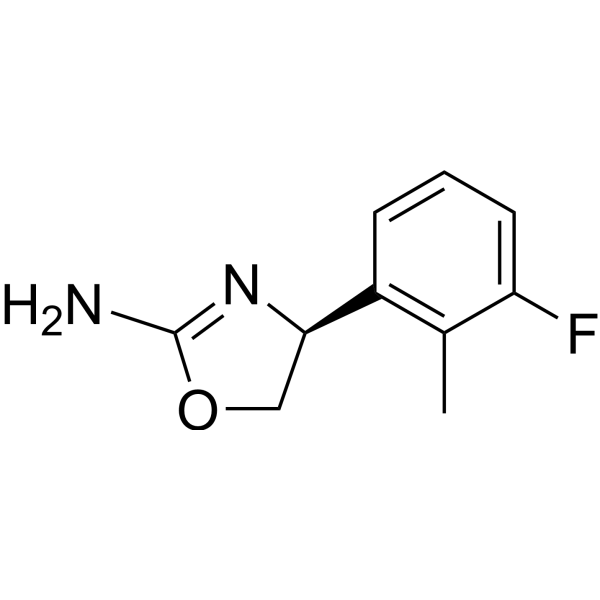
RO5256390
 0 ImagesRO5256390 is an orally effective trace amine associated receptor 1 (TAAR1) agonist. RO5256390 exhibits pro-cognitive and antidepressant-like properties in rodent and primate models, showing similar brain activation patterns to Olanzapine (HY-14541). RO5256390 blocks compulsive overeating behavior in rats. RO5256390 can inhibit ATP (HY-B2176)-induced TNF secretion in mouse bone marrow-derived macrophages.
-
ZH8651
 0 ImagesZH8651 is an orally active TAAR1 agonist. ZH8651 activates the Gs and Gq signaling pathways. ZH8651 alleviates dizocilpine-induced hyperactivity, improves prepulse inhibition deficits, and attenuates cognitive impairment in mice. ZH8651 can be used for the research of schizophrenia.
-
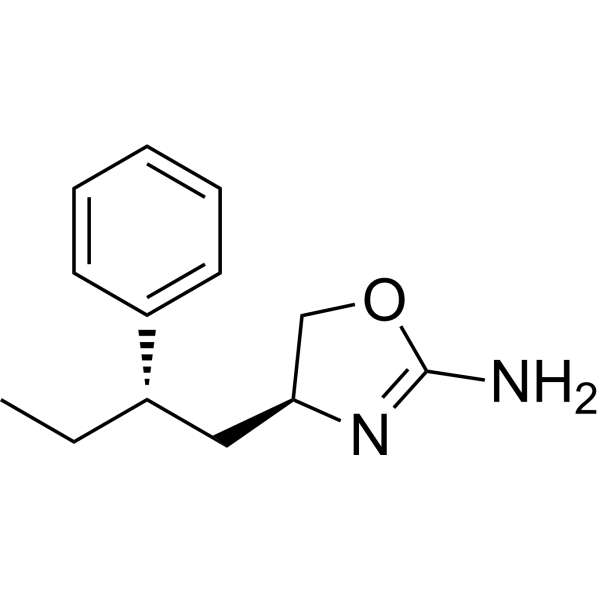
RO5263397
 0 ImagesRO5263397 is a potent, selective, and orally available TAAR1 agonist, with EC50s of 17 and 35 nM for human TAAR1 and rat TAAR1, respectively. RO5263397 regulates wakefulness and EEG spectral composition. Antidepressant-like effect.
-
RTI-7470-44
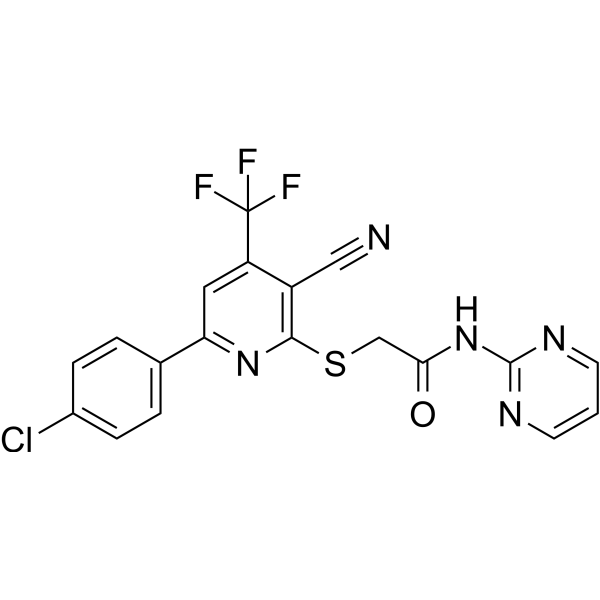 0 ImagesRTI-7470-44 is an orally active and blood-brain barrier-permeable antagonist of trace amine-associated receptor 1 (hTAAR1) with a Ki of 0.3 nM. RTI-7470-44 inhibits hTAAR1-mediated cAMP production and signal transduction (IC50 = 8.4 nM), and blocks hTAAR1-mediated GIRK current responses. RTI-7470-44 increases the spontaneous firing frequency of dopaminergic neurons and reduces collagen-induced platelet aggregation. RTI-7470-44 can be used in studies related to Parkinson's disease and gastric emptying.
-
LK00764
 0 ImagesCat. No.: HY-183428CAS No.: 2916446-33-6LK00764 is a TAAR1 agonist with an EC50 of 4 nM. LK00764 alleviates Dizocilpine (HY-15084B)-induced hyperlocomotion, reduces vertical locomotor activity, attenuates spontaneous hyperlocomotion in dopamine transporter knockout rats, and inhibits stress-induced hyperthermia in rats. LK00764 can be used for the research of schizophrenia.
-
RO5192022
 0 ImagesCat. No.: HY-186230CAS No.: 1043489-40-2RO5192022 is a TAAR1 agonist and a radioligand for TAAR1 binding assays. RO5192022 exhibits antipsychotic-like properties. RO5192022 can be used in studies related to schizophrenia.
-
TAAR1-agonist-4
 0 ImagesCat. No.: HY-183489CAS No.: 1357266-44-4TAAR1-agonist-4 is a TAAR1 agonist and oral hypoglycemic agent with an EC50 of 0.0046 μM for TAAR1. TAAR1-agonist-4 alleviates antipsychotic-related metabolic side effects, improves negative and cognitive symptoms, and reduces drug abuse behaviors. TAAR1-agonist-4 is applicable to research on schizophrenia, acute manic episodes associated with bipolar disorder, and glucose intolerance.
-
RO5166017
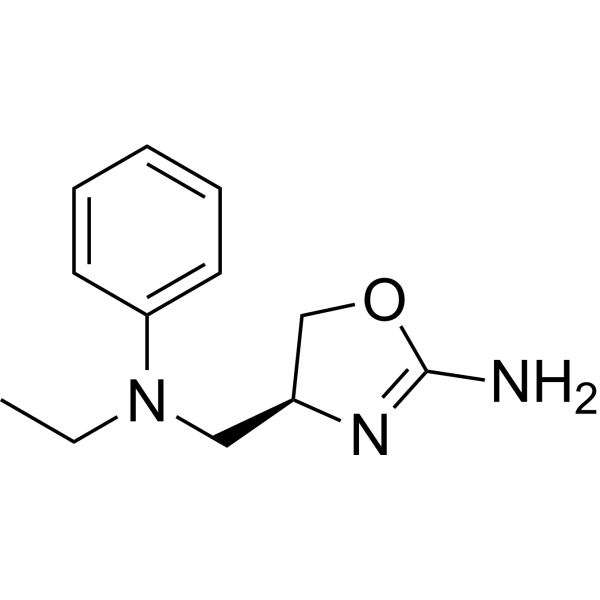 0 ImagesRO5166017 is an orally active and species-crosses TAAR1 agonist, with Ki values of 1.9 nM, 2.7 nM, 31 nM and 24 nM for mouse, rat, human and cynomolgus monkey, respectively.
-
Ractopamine hydrochloride
 0 ImagesSynonyms: LY031537Ractopamine hydrochloride (LY031537) is a potent and orally active β-adrenergic receptor (βAR) agonist with Kd value of ~25 nM for pig β1AR and β2AR. Ractopamine hydrochloride also is a mTAAR1 agonist with an EC50 of 16 μM. Ractopamine hydrochloride promotes muscle mass development, limits fat deposition, reduces feed consumption, increases total cellular protein synthesis, and improves growth rate and feed efficiency in finishing swine. Ractopamine hydrochloride can be used for researching to increase lean tissue growth and improve production efficiency in pigs.
-
Ralmitaront
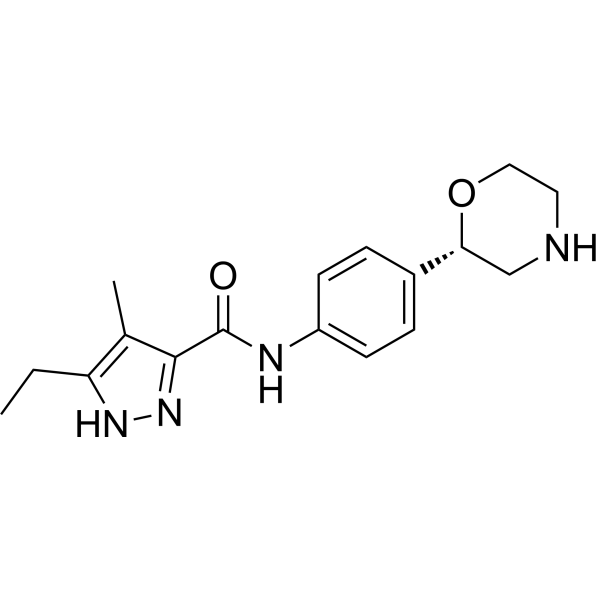 0 ImagesSynonyms: RO6889450Ralmitaront (RO6889450) is an orally active agonist of trace amine-associated receptor 1 (TAAR1) with a EC50 value of 110.4 nM. Ralmitaront has antipsychotic, cognitively improvement, and antidepressant activity in rodents. Ralmitaront can be used as a neurosuppressant in the study of neuro-related diseases, such as schizophrenia (SCZ), schizoaffective disorder.
-
RO5203648
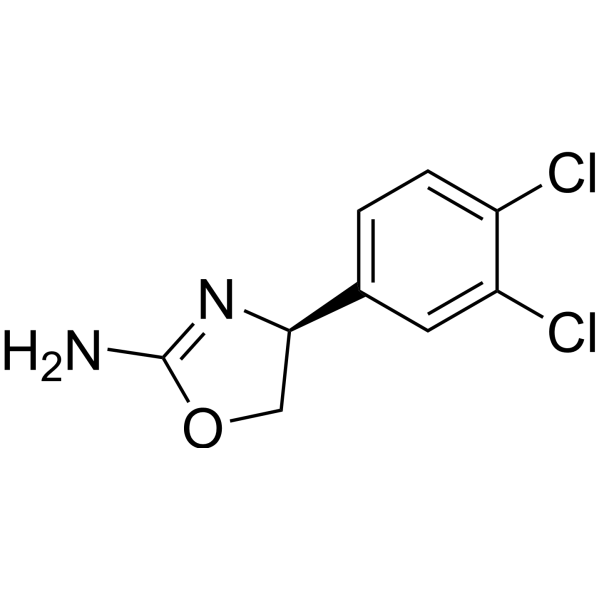 0 ImagesRO5203648 is a potent and highly selective partial agonist of TAAR1 (Trace amine-associated receptor 1) with high affinity. RO5203648 demonstrates a novel paradigm for neuropsychiatric research.
-
3-Iodothyronamine hydrochloride
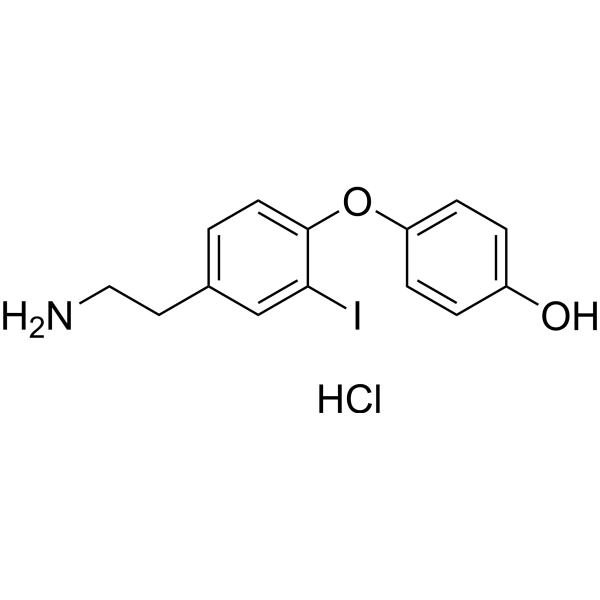 0 Images3-Iodothyronamine (hydrochloride) is an endogenous and rapid-acting derivative of thyroid hormone. 3-Iodothyronamine potently activates an orphan G protein-coupled receptor in vitro (TAAR1) and induced hypothermia in vivo on a rapid time scale. 3-Iodothyronamine can be used for the research of congestive heart failure.
-
2-Phenylpropan-1-amine hydrochloride
 0 Images2-Phenylpropan-1-amine hydrochloride, a phenethylamine compound, is an agonist of the human trace amine-associated receptor 1 (TAAR1).
-
ZH8659 hydrochloride
 0 ImagesCat. No.: HY-160001APurity: 99.21%ZH8659 hydrochloride is a trace amine-associated receptor 1 (TAAR1)-Gq agonist. ZH8659 hydrochloride can be used for the research of neurological disorders.

-
ZH8659
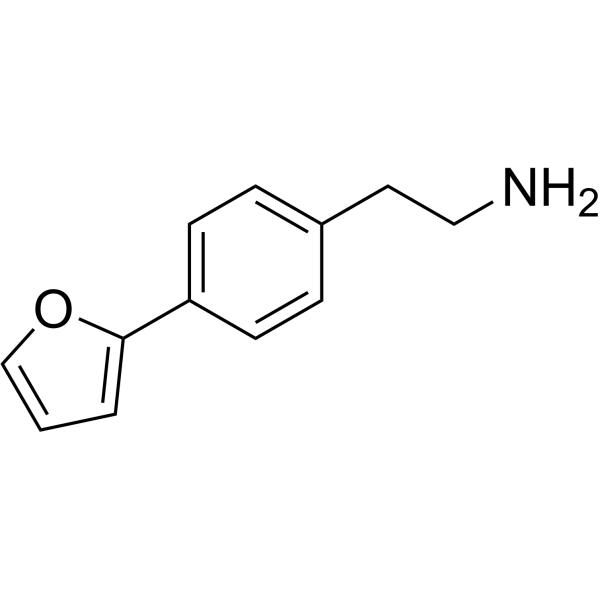 0 ImagesCat. No.: HY-160001CAS No.: 885466-70-6ZH8659 is a trace amine-associated receptor 1 (TAAR1) –Gq agonist. ZH8659 can be used for the research of schizophrenia.
-
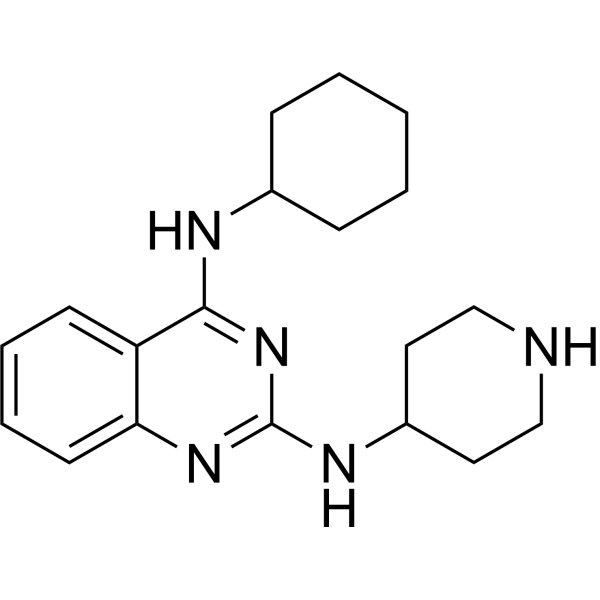
Ractopamine-13C6
 0 ImagesCat. No.: HY-W751276CAS No.: 1415400-62-2Ractopamine-13C6 is the 13C-labeled Ractopamine (HY-113781). Ractopamine (LY031537 free base) is a potent and orally active β-adrenergic receptor (βAR) agonist with Kd value of ~25 nM for pig β1AR and β2AR. Ractopamine also is a mTAAR1 agonist with an EC50 of 16 μM. Ractopamine promotes muscle mass development, limits fat deposition, reduces feed consumption, increases total cellular protein synthesis, and improves growth rate and feed efficiency in finishing swine. Ractopamine can be used for researching to increase lean tissue growth and improve production efficiency in pigs.
-
TAAR1 agonist 1 hydrochloride
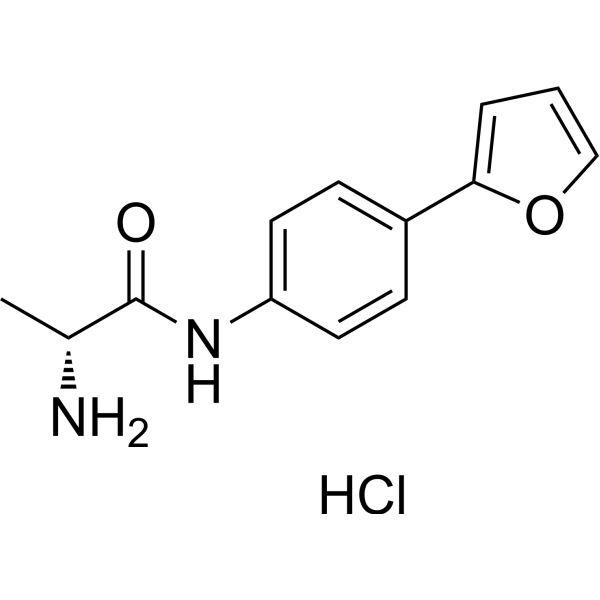 0 ImagesCat. No.: HY-157955ATAAR1 agonist 1 hydrochloride (6e·HCl) is a novel G-protein-coupled receptor TAAR1 agonist. TAAR1 agonist 1 hydrochloride is used in the study of schizophrenia.
- 1
- 2



